AODD Exhaust Icing: Diagnose the Air System Before Replacing Parts
Investigate AODD pump exhaust icing through air quality, dynamic supply pressure and exhaust checks before ordering an air repair kit.
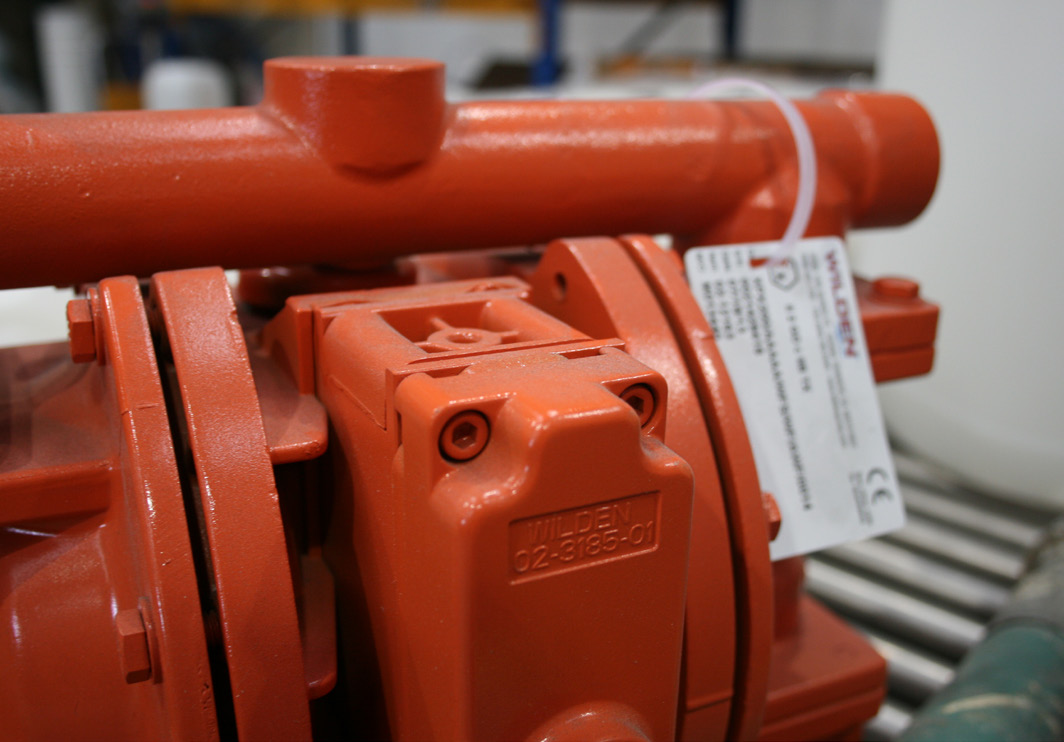
A diaphragm pump starts normally, loses speed after a period of operation and recovers after standing idle. Ice around the exhaust is an important observation in that sequence, but it is not a complete diagnosis. The investigation must distinguish moisture and cooling effects from restricted exhaust flow or a separate air-distribution fault.
An AODD pump exhaust icing complaint should be documented before a diaphragm pump air repair kit is ordered. The visible symptom helps direct the investigation, but does not establish which replacement parts are needed.
Compressed air cools as it expands through the pumping cycle. Moisture can condense or freeze in affected parts of the air system. The outcome depends on the supplied air condition, demand and exhaust arrangement. Manufacturer troubleshooting guidance identifies air quality and exhaust restrictions among the checks for an AODD operating problem. [R12]
Record the AODD pump exhaust icing sequence
Note the time from startup to slowdown, whether the fault appears only at high demand, and whether other equipment on the same air branch is affected. Record air pressure near the pump while it is operating, not only when it is stopped. Photograph the location of visible ice and identify whether it is at the muffler, a fitting or another component.
These observations help distinguish a repeatable operating condition from an intermittent fault. A regulator showing adequate static pressure does not demonstrate that the branch can supply the required air volume while several consumers are running.
Examine the supply and exhaust as separate systems
Check the condition and maintenance records of filters, drains and any air-drying equipment. A standard particulate filter should not be assumed to deliver a specified pressure dew point. Have the utility team evaluate whether the air treatment is suitable for the operating conditions.
Inspect the exhaust path for contamination, restriction and an unsuitable extension hose. Follow the exact pump manual for permissible routing and component selection. A clogged silencer and a frozen component may both reduce performance, but the corrective work is not necessarily the same.
| Observation | Next check | Avoid assuming |
|---|---|---|
| Problem develops during a long run | Air condition, demand and exhaust temperature pattern | That a diaphragm has failed |
| Dynamic inlet pressure falls | Supply branch, regulator capacity and competing loads | That the static gauge reading proves adequate supply |
| Exhaust path is contaminated | Identify the contamination and inspect by the approved method | That cleaning the exterior clears the internal path |
| Fault persists after thawing | Air distribution and mechanical checks from the manual | That visible ice explains every symptom |
Do not turn a diagnostic shortcut into permanent operation
Removing a muffler or changing exhaust routing can introduce noise and containment problems. If a diaphragm fails, process liquid may enter the air side. Exhaust arrangements therefore need to consider where released material could go, not simply whether the pump runs faster after a restriction is removed.
Stop and isolate the equipment before inspecting or servicing it, and release stored air and fluid pressure using the applicable procedure. Do not add heaters, solvents or lubricants as an improvised cure. The chosen remedy must be compatible with the pump, air system and operating environment. [R10]
Distinguish design features from site conditions
ARO describes its EXP Quick Dump arrangement as directing cold exhaust away from ice-prone components. Such a feature is relevant when selecting equipment, but it does not eliminate the need to verify air quality, supply capacity and the installed exhaust path. [R13]
A useful repair report includes the full model, operating pressure, air-treatment arrangement, approximate run time before the event and photographs. WILLEE can use that evidence to focus an enquiry on the appropriate air-section parts or manufacturer troubleshooting route, rather than replacing a wet-end kit without a diagnosis.
Send an air-system troubleshooting enquiry
Technical references
[R12] PSG Store. AODD Pump Troubleshooting.
[R13] ARO. EXP Series Pneumatic Diaphragm Pumps.
[R10] Wilden / PSG. Safety Supplement to Engineering, Operation and Maintenance Manual.
Application photographs are manufacturer reference images, not WILLEE customer-project claims. Model-specific instructions take precedence over this general engineering discussion.