AODD Exhaust Icing: Diagnose the Air System Before Replacing Parts
Investigar el hielo de escape de la bomba AODD a través de la calidad del aire, la presión de suministro dinámica y las comprobaciones de escape antes de pedir un kit de reparación de aire.
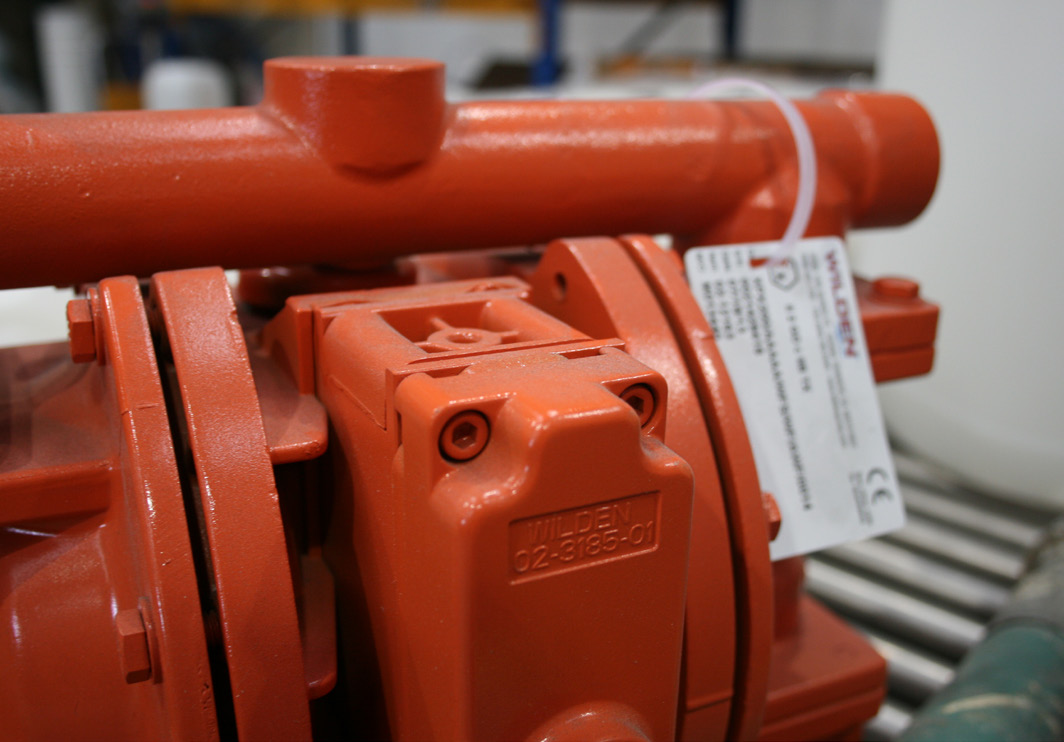
Una bomba de diafragma arranca normalmente, pierde velocidad después de un período de funcionamiento y se recupera después de estar parada. El hielo alrededor del escape es una observación importante en esa secuencia, pero no es un diagnóstico completo.La investigación debe distinguir entre los efectos de la humedad y el enfriamiento del flujo de escape restringido o una falla separada de distribución de aire.
Una queja de hielo en el escape de la bomba AODD debe documentarse antes de pedir un kit de reparación de aire de la bomba de diafragma.El síntoma visible ayuda a dirigir la investigación, pero no establece qué piezas de repuesto se necesitan.
El aire comprimido se enfría a medida que se expande a través del ciclo de bombeo. La humedad puede condensarse o congelarse en las partes afectadas del sistema de aire. El resultado depende de la condición del aire suministrado, la demanda y la disposición del escape. La guía de solución de problemas del fabricante identifica la calidad del aire y las restricciones de escape entre las comprobaciones para un problema de funcionamiento de AODD. [R12]
Record the AODD pump exhaust icing sequence
Note the time from startup to slowdown, whether the fault appears only at high demand, and whether other equipment on the same air branch is affected. Record air pressure near the pump while it is operating, not only when it is stopped. Photograph the location of visible ice and identify whether it is at the muffler, a fitting or another component.
These observations help distinguish a repeatable operating condition from an intermittent fault. A regulator showing adequate static pressure does not demonstrate that the branch can supply the required air volume while several consumers are running.
Examine the supply and exhaust as separate systems
Revise el estado y los registros de mantenimiento de los filtros, drenajes y cualquier equipo de secado de aire. No se debe asumir que un filtro de partículas estándar entregará un punto de rocío a presión especificado.
Inspect the exhaust path for contamination, restriction and an unsuitable extension hose. Follow the exact pump manual for permissible routing and component selection. A clogged silencer and a frozen component may both reduce performance, but the corrective work is not necessarily the same.
| Observación | Next check | Evita asumir |
|---|---|---|
| Problem develops during a long run | Condición del aire, demanda y patrón de temperatura de escape | That a diaphragm has failed |
| Dynamic inlet pressure falls | Supply branch, regulator capacity and competing loads | That the static gauge reading proves adequate supply |
| Exhaust path is contaminated | Identify the contamination and inspect by the approved method | That cleaning the exterior clears the internal path |
| Fault persists after thawing | Distribución de aire y comprobaciones mecánicas del manual | That visible ice explains every symptom |
Do not turn a diagnostic shortcut into permanent operation
Removing a muffler or changing exhaust routing can introduce noise and containment problems. If a diaphragm fails, process liquid may enter the air side. Exhaust arrangements therefore need to consider where released material could go, not simply whether the pump runs faster after a restriction is removed.
Stop and isolate the equipment before inspecting or servicing it, and release stored air and fluid pressure using the applicable procedure. Do not add heaters, solvents or lubricants as an improvised cure. The chosen remedy must be compatible with the pump, air system and operating environment. [R10]
Distinguish design features from site conditions
ARO describes its EXP Quick Dump arrangement as directing cold exhaust away from ice-prone components. Such a feature is relevant when selecting equipment, but it does not eliminate the need to verify air quality, supply capacity and the installed exhaust path. [R13]
Un informe de reparación útil incluye el modelo completo, la presión de funcionamiento, la disposición del tratamiento de aire, el tiempo de funcionamiento aproximado antes del evento y fotografías.WILLEE puede usar esa evidencia para enfocar una consulta en las piezas de la sección de aire apropiadas o la ruta de solución de problemas del fabricante, en lugar de reemplazar un kit de extremo húmedo sin un diagnóstico.
Send an air-system troubleshooting enquiry
Technical references
[R12] PSG Store. AODD Pump Troubleshooting.
[R13] ARO. EXP Series Pneumatic Diaphragm Pumps.
[R10] Wilden / PSG. Safety Supplement to Engineering, Operation and Maintenance Manual.
Las fotografías de aplicación son imágenes de referencia del fabricante, no declaraciones de proyectos de clientes de WILLEE.