備用泵只有在計劃恢復運行時才能準備就緒
備用單元隔膜泵維護清單:清潔記錄、儲存狀況、零件識別和返回服務檢查。
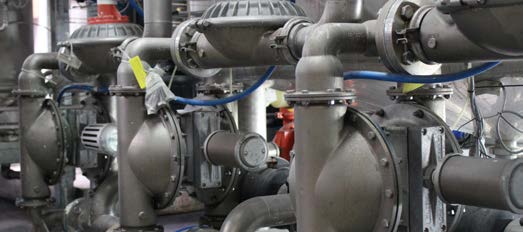
備用隔膜泵看起來就像是停機保險,其價值取決於從停止使用到再次需要它的時間。 未知殘留物、連接損壞或未記錄的材料配置可能會將快速更換變成第二個故障排除任務。
備用設備隔膜泵維護清單應包括釋放到服務狀態和配置特定隔膜泵備件清單。 一般庫存清單不能顯示單個單元是否準備好履行其指定職責。
The useful question is not “Do we own a spare?” It is “Can this identified spare return to this duty under a known procedure?”
Start the standby diaphragm pump maintenance checklist
Record the last fluid handled, the reason for removal and whether a fault was present. A pump removed for planned standby should not be indistinguishable from one waiting for a diaphragm investigation. Attach its complete model identification and any changes made during repair.
Document the cleaning medium and method, and the status of remaining process liquid. Graco's diaphragm-pump maintenance instructions call for appropriate flushing and pressure release before storage, including attention to liquids that may dry or freeze inside the equipment. Apply the procedure for the exact pump and fluid combination. [R11]
“Flushed” is not a universal cleanliness certification. A pump previously used for one chemical or product class may need additional assessment before a different service. Retain that distinction in the equipment record.
Store a known condition, not an assumption
Protect connections from contamination using a method appropriate to the pump and residual medium. Follow the manufacturer's storage requirements for environmental exposure and preservation. Do not improvise a sealing method that traps an unassessed pressure or chemically unstable residue.
Keep the pump's identity visible. Store compatible repair information with the record, not loose inside an open port. If components have been changed, update the actual configuration rather than relying on an old external label alone.
| Record item | Useful entry |
|---|---|
| Identity | Full pump model, asset number and serial number where available |
| Previous service | Fluid, temperature range and reason for removal |
| 條件 | Repaired, inspected, awaiting diagnosis or ready for assigned duty |
| 清潔 | Medium, method, date and remaining restrictions |
| Preservation | 適用的製造商說明和完成記錄 |
| Release | Person responsible for return-to-service verification |
Inspect before reconnecting utilities
確認泵的預期負荷仍然符合要求。 檢查可接觸的軟管、連接件、緊固件和外部狀況。 檢查接收裝置是否具備所需的儀器、保護裝置和隔離安排。
Do not turn a generic maintenance article into a torque sheet. Fastener sequences and values depend on the model, material and assembly. Use the applicable manual, and perform tightening or servicing only after the required isolation and depressurization. Manufacturer guidance explicitly cautions against tightening pressurized equipment. [R5, R10]
Make the first run a controlled verification
Use an approved startup procedure and compatible test medium where appropriate. Check for leakage, repeatable operation and the expected delivery under a defined condition before releasing the pump to normal duty. A short no-load demonstration does not verify performance against the actual process resistance.
Record the result and any restrictions. If the pump does not behave as expected, retain the observations rather than immediately substituting random parts. Storage time alone does not establish which component needs replacement, and no universal shelf-life or maintenance interval is implied here.
WILLEE can help organize replacement-parts enquiries from the verified configuration and service history. An identified, documented standby pump is far more useful than a visually similar unit whose previous contents and condition are unknown.
Prepare a standby-pump parts enquiry
Technical references
[R11] Graco. 308981ZAZ: Air-Operated Diaphragm Pumps – Instructions.
[R5] ARO. AODD Pump Maintenance: 5 Key Tips for Longevity.
[R10] Wilden / PSG. Safety Supplement to Engineering, Operation and Maintenance Manual.
應用照片是製造商的參考圖像,而不是 WILLEE 客戶項目聲明。 具體型號的說明優先於這一一般工程討論。