予備ポンプを使える状態に保つには、運転復帰の計画が必要
予備機向けのダイヤフラムポンプ保守チェックリスト。洗浄記録、保管状態、部品の識別、運転復帰前の確認事項を扱います。
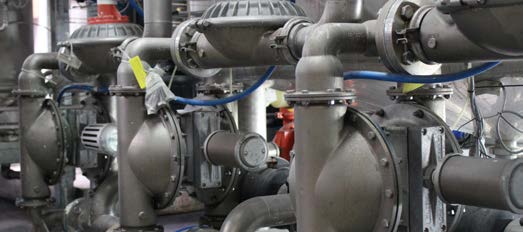
A spare diaphragm pump on a shelf can look like insurance against downtime. Its value depends on what happens between removal from service and the moment it is needed again. Unknown residues, damaged connections or an undocumented materials configuration can turn a quick changeover into a second troubleshooting job.
A diaphragm pump maintenance checklist for standby equipment should include release-to-service status and a configuration-specific diaphragm pump spare parts list. A general inventory list cannot show whether an individual unit is ready for its assigned duty.
The useful question is not “Do we own a spare?” It is “Can this identified spare return to this duty under a known procedure?”
Start the standby diaphragm pump maintenance checklist
Record the last fluid handled, the reason for removal and whether a fault was present. A pump removed for planned standby should not be indistinguishable from one waiting for a diaphragm investigation. Attach its complete model identification and any changes made during repair.
Document the cleaning medium and method, and the status of remaining process liquid. Graco's diaphragm-pump maintenance instructions call for appropriate flushing and pressure release before storage, including attention to liquids that may dry or freeze inside the equipment. Apply the procedure for the exact pump and fluid combination. [R11]
“Flushed” is not a universal cleanliness certification. A pump previously used for one chemical or product class may need additional assessment before a different service. Retain that distinction in the equipment record.
Store a known condition, not an assumption
Protect connections from contamination using a method appropriate to the pump and residual medium. Follow the manufacturer's storage requirements for environmental exposure and preservation. Do not improvise a sealing method that traps an unassessed pressure or chemically unstable residue.
Keep the pump's identity visible. Store compatible repair information with the record, not loose inside an open port. If components have been changed, update the actual configuration rather than relying on an old external label alone.
| Record item | Useful entry |
|---|---|
| Identity | Full pump model, asset number and serial number where available |
| Previous service | Fluid, temperature range and reason for removal |
| Condition | Repaired, inspected, awaiting diagnosis or ready for assigned duty |
| Cleaning | Medium, method, date and remaining restrictions |
| Preservation | Applicable manufacturer instructions and completion record |
| Release | Person responsible for return-to-service verification |
Inspect before reconnecting utilities
Confirm that the intended duty still matches the pump. Examine accessible hoses, connections, fasteners and external condition. Check that required instruments, protective devices and isolation arrangements are available in the receiving installation.
Do not turn a generic maintenance article into a torque sheet. Fastener sequences and values depend on the model, material and assembly. Use the applicable manual, and perform tightening or servicing only after the required isolation and depressurization. Manufacturer guidance explicitly cautions against tightening pressurized equipment. [R5, R10]
Make the first run a controlled verification
Use an approved startup procedure and compatible test medium where appropriate. Check for leakage, repeatable operation and the expected delivery under a defined condition before releasing the pump to normal duty. A short no-load demonstration does not verify performance against the actual process resistance.
Record the result and any restrictions. If the pump does not behave as expected, retain the observations rather than immediately substituting random parts. Storage time alone does not establish which component needs replacement, and no universal shelf-life or maintenance interval is implied here.
WILLEE can help organize replacement-parts enquiries from the verified configuration and service history. An identified, documented standby pump is far more useful than a visually similar unit whose previous contents and condition are unknown.
Prepare a standby-pump parts enquiry
Technical references
[R11] Graco. 308981ZAZ: Air-Operated Diaphragm Pumps – Instructions.
[R5] ARO. AODD Pump Maintenance: 5 Key Tips for Longevity.
[R10] Wilden / PSG. Safety Supplement to Engineering, Operation and Maintenance Manual.
Application photographs are manufacturer reference images, not WILLEE customer-project claims. Model-specific instructions take precedence over this general engineering discussion.