Observe before changing settings
A cycling sound tells you that the mechanism is moving; it does not measure delivered liquid. Record when the problem occurs, whether the pump primes, the source level and any recent change to hoses, valves or the fluid. Do not keep increasing air pressure as a substitute for identifying the cause.
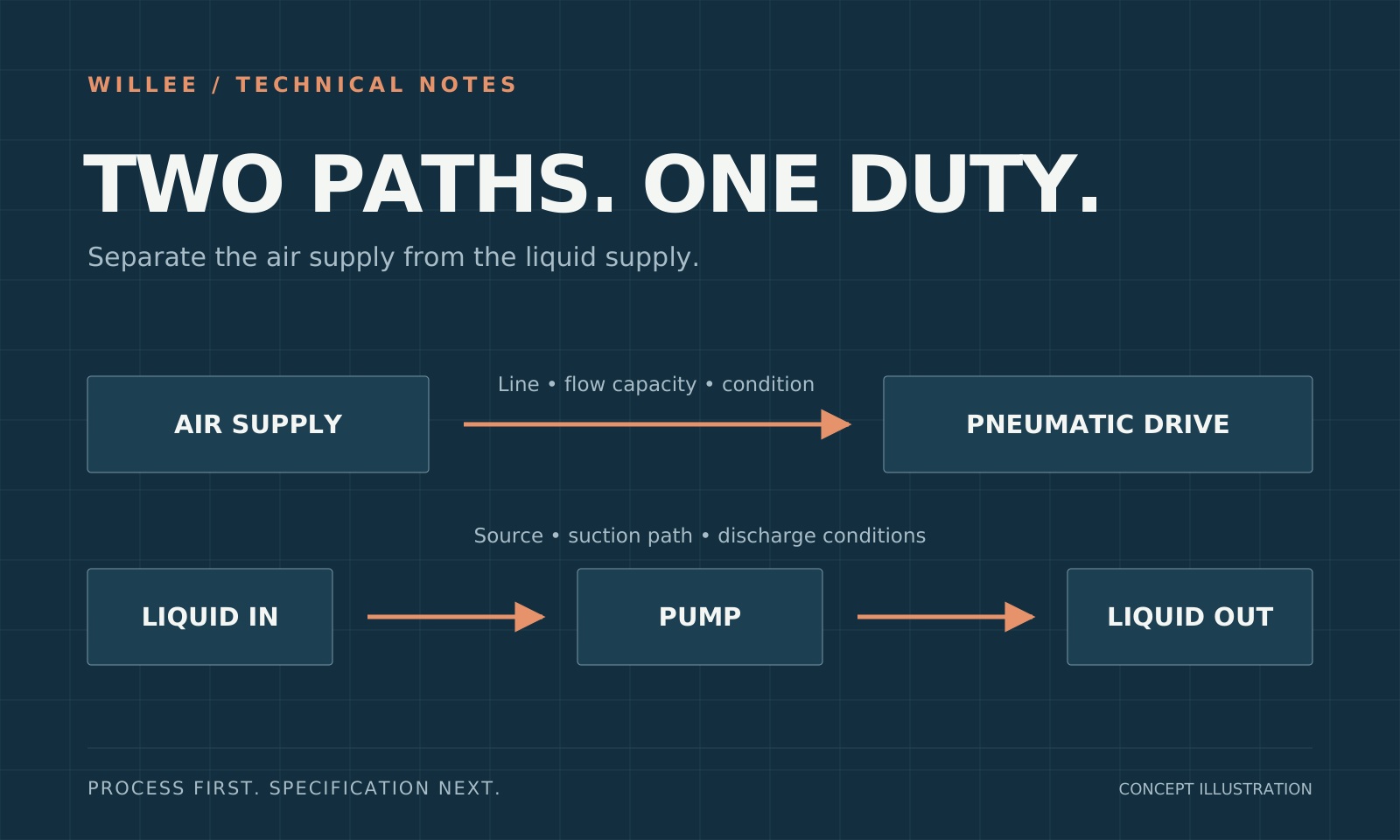
Check the air supply under demand
Graco identifies undersized air lines and restrictions as common causes of poor AODD performance. A pressure reading upstream does not describe every restriction between the supply and the pump. Compare the line and accessories with the model’s installation requirements, and record any erratic running or exhaust icing. Graco troubleshooting guidance.
Look at the liquid side separately
Confirm the source contains liquid and that the intended suction path is available. A restricted line, suction leak or check-valve problem can interfere with delivery. Graco’s ChemSafe troubleshooting table includes suction-line and check-valve faults and relates cavitation to operating and inlet conditions. Use the table for the exact pump model, because repair steps and component arrangements differ. ChemSafe 307 instructions and troubleshooting.
Turn observations into a service enquiry
Send the full model code, fluid properties, suction and discharge layout, measured conditions and a description of the symptom. Before opening equipment or clearing a blockage, isolate the energy sources and follow the model’s pressure-relief procedure. A useful record separates observations from suspected causes, helping the service discussion focus on the next check rather than a speculative parts order.
Check air supply and liquid supply as separate paths. Cycling frequency is not a flow measurement.
Discuss this with KevinUse the instructions and specifications for the exact equipment configuration. This article introduces the selection discussion.