Begin at the destination
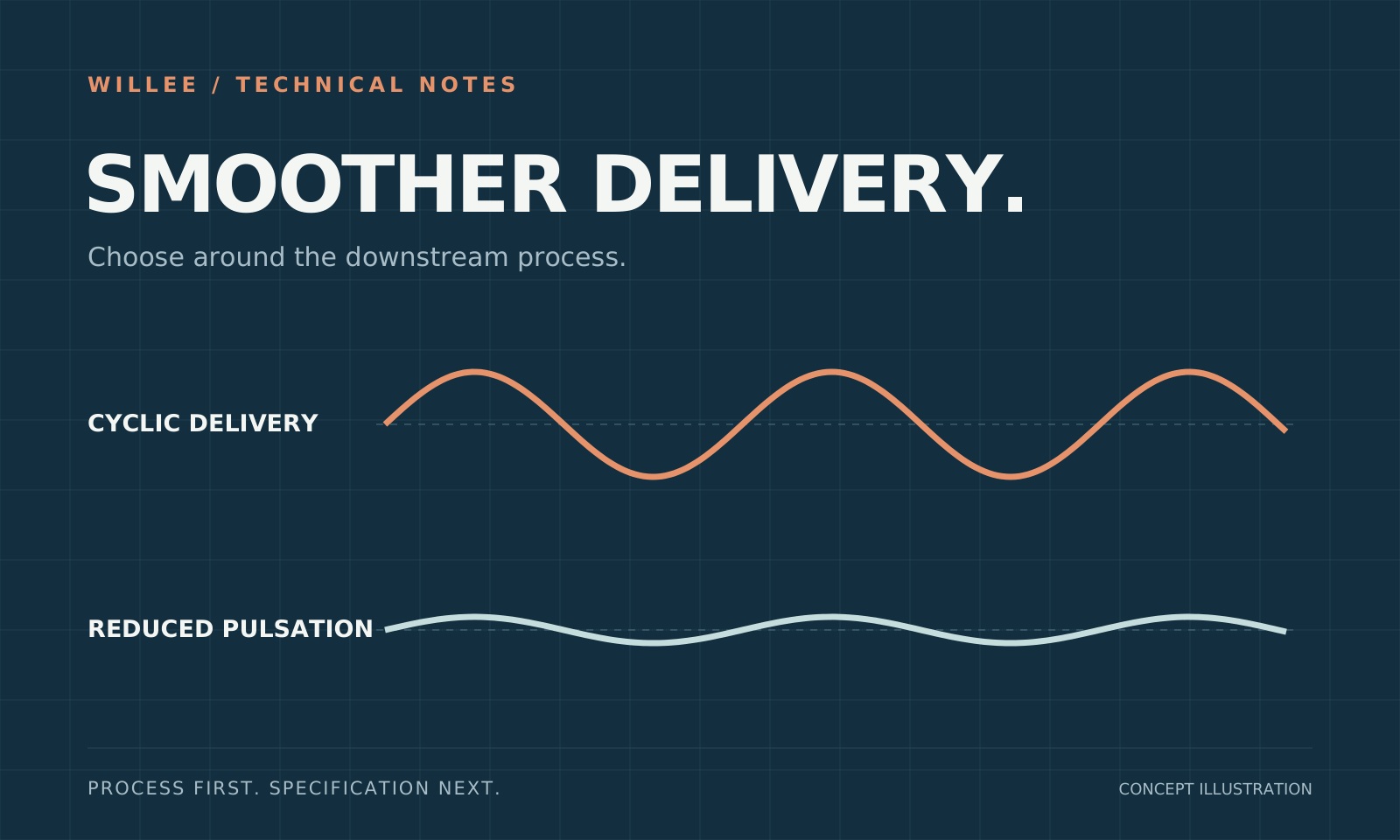
An air-operated double-diaphragm pump delivers liquid through alternating strokes. The resulting fluctuations matter most when the receiving equipment needs steadier delivery. A filling operation, a sensitive instrument or a coating process may notice variation that a simple tank transfer can tolerate. A dampener is therefore a system decision, not an automatic addition to every pump.
What the accessory changes
A correctly selected pulsation dampener can reduce pressure and flow fluctuations on the discharge side. It does not increase the pump’s documented pressure limit or make the liquid chemically compatible with unsuitable wetted parts. All-Flo describes discharge-side dampeners for smoother delivery, while Almatec explains their role in reducing the pulsation associated with oscillating pump action. All-Flo reference · Almatec reference.
Specify the complete assembly
Record the fluid, operating temperature, working pressure and required flow range. Confirm the body, diaphragm and seal materials, connection standard and any air-supply or charging requirements for the specific accessory. Installation position and setup belong to the manufacturer’s instructions; a visually similar unit is not enough to establish suitability.
Define a useful acceptance check
Write down the problem you want to solve before ordering: inconsistent filling, an unstable pressure indication or a downstream process that needs smoother delivery. Compare the same operating conditions before and after installation. Keep the selected pump code and accessory code together in the maintenance record so replacement parts can be identified separately.
Describe the downstream problem first. Then check the dampener’s configuration and installation requirements.
Discuss this with KevinUse the instructions and specifications for the exact equipment configuration. This article introduces the selection discussion.