Viscous Liquid Transfer: Design the Suction Line Before Increasing Air Pressure
Select a diaphragm pump for viscous fluids by assessing suction lift, true hose bore and product temperature before increasing air pressure.
Executive summary
隔膜泵只能排出到達並填充其腔室的液體。 當粘性產品進入過慢時,增加循環速度可能無法產生相應的輸送量增加。 限制因素可能是進口系統而不是泵的額定出口容量。
Selecting a diaphragm pump for viscous fluids requires more than a maximum viscosity statement. High-viscosity diaphragm pump selection should connect the fluid data with the actual diaphragm pump suction lift and inlet losses.
This paper examines suction-side design for an AODD transfer installation. Its objective is to help engineers identify the data needed for a defensible selection and distinguish a pipework problem from an equipment-capacity problem. It does not replace a model-specific performance curve, a rheological assessment or a site hydraulic calculation.
1. Define the duty for a diaphragm pump for viscous fluids
“Thick liquid” is not a design property. Record the viscosity and its measurement temperature. For a formulation that changes behavior with shear rate or time, provide the relevant test method or rheological data rather than a single catalogue-style number. A cold first batch and a warm recirculating batch may present different inlet conditions.
還要記錄密度、隨機氣體、懸浮固體和任何沉降或固化傾向,確定使用哪些清潔液,以及部分排空的管道在兩次加工之間是否可以保持閒置。 這些細節有助於確定必須檢查的條件,即使最初沒有完整的液壓模型。
2. Walk the complete inlet route
Start at the source vessel, not at the pump flange. Note the minimum liquid level, the outlet valve, adapters, hose internal diameter, length, fittings and strainer. A large nominal hose can still contain a restrictive coupling. A short section of reduced bore near a container valve can dominate an otherwise generous connection.
Wilden installation guidance calls for a short, direct suction route, suitable reinforced hose and independently supported piping. It also warns that air leakage at connections can reduce suction capability. Those principles establish a good starting arrangement; the final dimensions still depend on the duty and exact model. [R7]
| Item to inspect | Question to resolve | Evidence to retain |
|---|---|---|
| Source vessel | Is approved venting adequate at the transfer rate? | Vessel arrangement and vent specification |
| Minimum source level | What is the vertical relationship to the pump inlet? | Measured elevations |
| Hose and couplings | What is the smallest actual internal bore? | Sizes, length and photographs |
| Strainer or screen | 正常的污染是否會限制供應? | 清潔和負載狀態觀察 |
| Product condition | What is the coldest or most resistant normal batch? | Temperature and viscosity data |
| Inlet pressure | Does pressure fluctuate as the pump cycles? | Suitable pressure record, not only one average |
3. Separate static lift from flow-dependent losses
For a liquid surface open to atmosphere, positioning the pump above the liquid creates a static lifting requirement. As the vessel empties, that requirement can increase. Pipe friction, fittings and local restrictions add further losses when liquid moves. A pressurized or sealed vessel requires a different assessment of the surface pressure and its allowable operating conditions.
The hydrostatic pressure difference is:
Pressure difference = density × gravitational acceleration × elevation difference.
For an illustrative liquid density of 1,300 kg/m³ and an upward lift of 3 m, the static term is approximately 38,259 Pa, or 0.383 bar. This is only the elevation contribution. It is not the complete suction requirement and does not demonstrate that any selected pump will prime successfully.
The example explains why a suction figure expressed in metres of water cannot be transferred unchanged to a denser liquid. The actual inlet assessment must also consider surface pressure, vapor pressure and flow-dependent losses. Manufacturer guidance similarly notes the effect of specific gravity on suction performance. [R8]
4. Why a small bore change can matter
For steady, fully developed laminar flow of an incompressible Newtonian liquid in a straight circular pipe, the Hagen-Poiseuille relationship gives a frictional pressure drop proportional to viscosity, pipe length and flow rate, and inversely proportional to the fourth power of internal diameter. [R17]
Under those restricted assumptions, changing internal diameter from 40 mm to 50 mm at the same flow, viscosity and length changes the straight-pipe loss by a factor of (40/50)⁴, or 0.4096. That represents about 59% less loss in that idealized pipe segment.
This is a sensitivity illustration, not a prediction for an entire AODD installation. It excludes fittings, entrances, non-Newtonian behavior and the unsteady flow associated with reciprocating pumping. A system may remain limited by a container outlet or another narrow section after the hose itself is enlarged. Manufacturer piping guidance also identifies unnecessary friction as a contributor to poor pump-system performance. [R9]
5. Treat a faster cycle rate as a test variable
Observe delivered volume and inlet behavior while making controlled changes within the equipment's operating limits. If cycle rate rises substantially but liquid delivery does not, investigate supply and filling conditions before escalating pressure further. Record the observation; do not use it alone to declare cavitation or a failed diaphragm.
一個有用的順序是覈實源液位和批准的通風口,檢查限制和空氣進入,確認產品溫度,然後評估操作設置。 在實際檢查之前,將設備隔離並減壓。
Where pulsating inlet pressure matters, an average gauge reading can conceal short low-pressure events. Select appropriate instrumentation and seek a more detailed dynamic assessment when required by the duty. A steady-flow calculation is a screening tool, not a complete description of a reciprocating inlet system.
6. Decide what should change
較短的路徑、更大的真實孔徑或較低的泵位置可能比增加的空氣壓力更有用。 充滿的安排仍然必須保持在模型允許的進氣壓力條件內。 加熱產品,不應該在沒有評估過程化學、材料限制和批准的操作程序的情況下假定是可以接受的。
If satisfactory inlet conditions cannot be achieved at the required rate, reconsider the pump configuration or transfer method with the supplier. Provide a dimensioned inlet sketch, actual fluid data and the minimum vessel level. This makes the next selection a response to a defined hydraulic requirement rather than a guess based on port size.
WILLEE can use those records to prepare a focused pump enquiry and identify where additional manufacturer review is needed.
Send your suction arrangement for review
Technical references
[R7] Wilden / PSG. PS8 Plastic Engineering, Operation and Maintenance Manual.
[R8] Wilden / PSG. Air-Operated Double Diaphragm Pumps for Oil and Fuel.
[R9] Wilden / PSG. Minimizing Pumping-System Friction Losses.
[R17] OpenStax. University Physics Volume 1, Section 14.7: Viscosity and Turbulence.
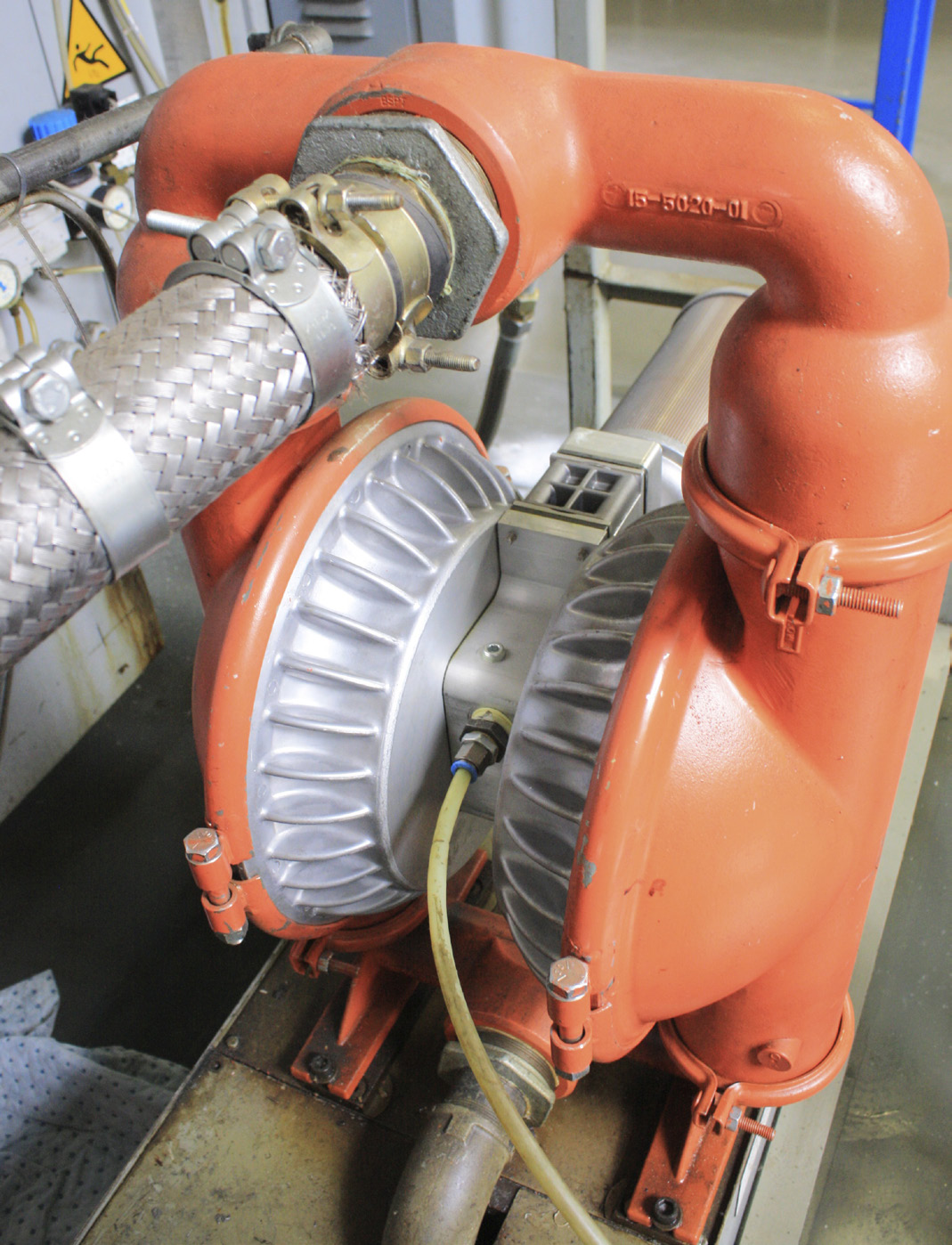
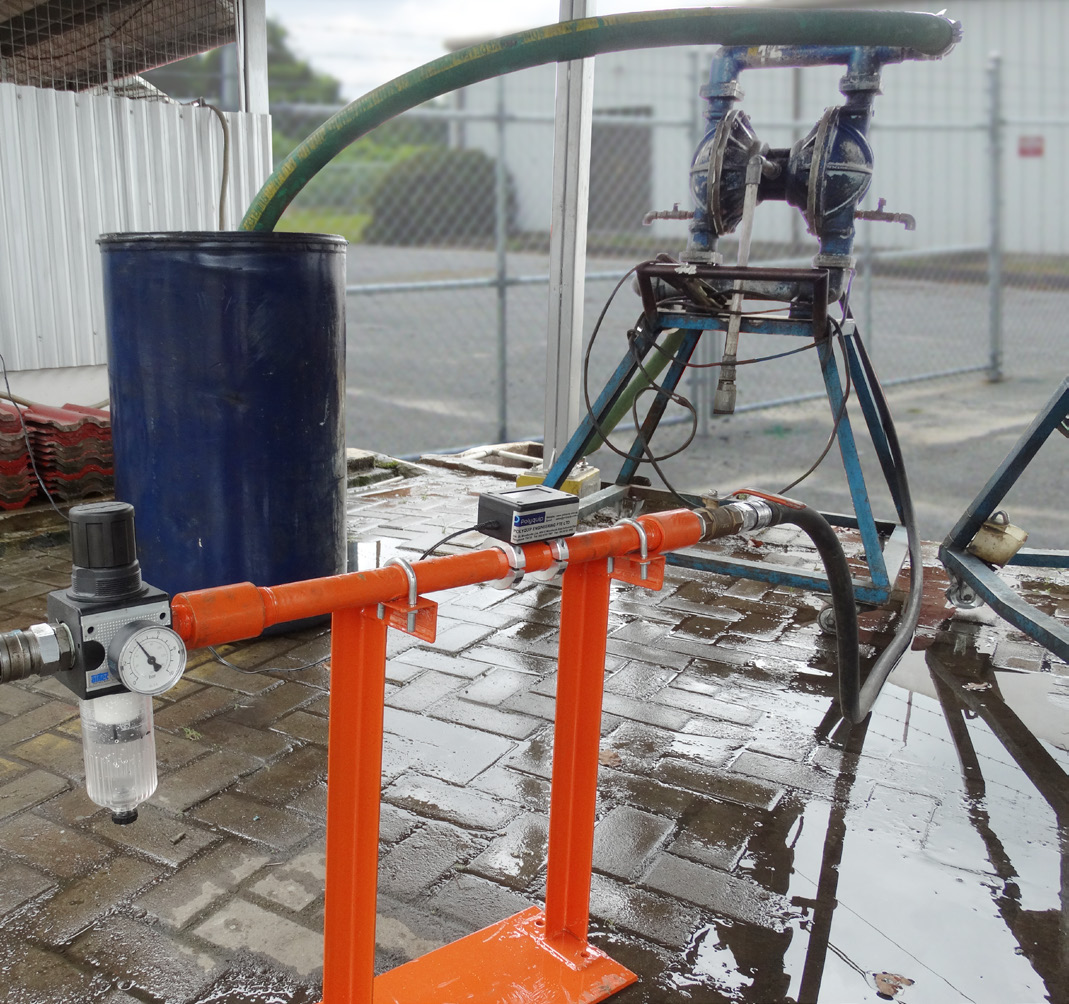
應用照片是製造商的參考圖像,而不是 WILLEE 客戶項目聲明。 具體型號的說明優先於這一一般工程討論。