電動ダイヤフラムポンプ:どの移送用途から導入を検討すべきか
実際の運転時間、同等の運転条件、システム全体の費用を基に、電動ダイヤフラムポンプへの置き換えを検討します。エア駆動式と電動式を比較します。
An air-operated diaphragm pump can be a sensible choice for a mobile unloading station and an expensive utility user on a continuously operated transfer line. Both statements can be true in the same factory. The decision to go electric should therefore begin with the duty of each installation, rather than a site-wide instruction to replace every pneumatic pump.
For an electric diaphragm pump retrofit, begin with a documented comparison of the existing duty and the proposed operating envelope. Energy-efficient diaphragm pump selection depends on that evidence, not on a technology label.
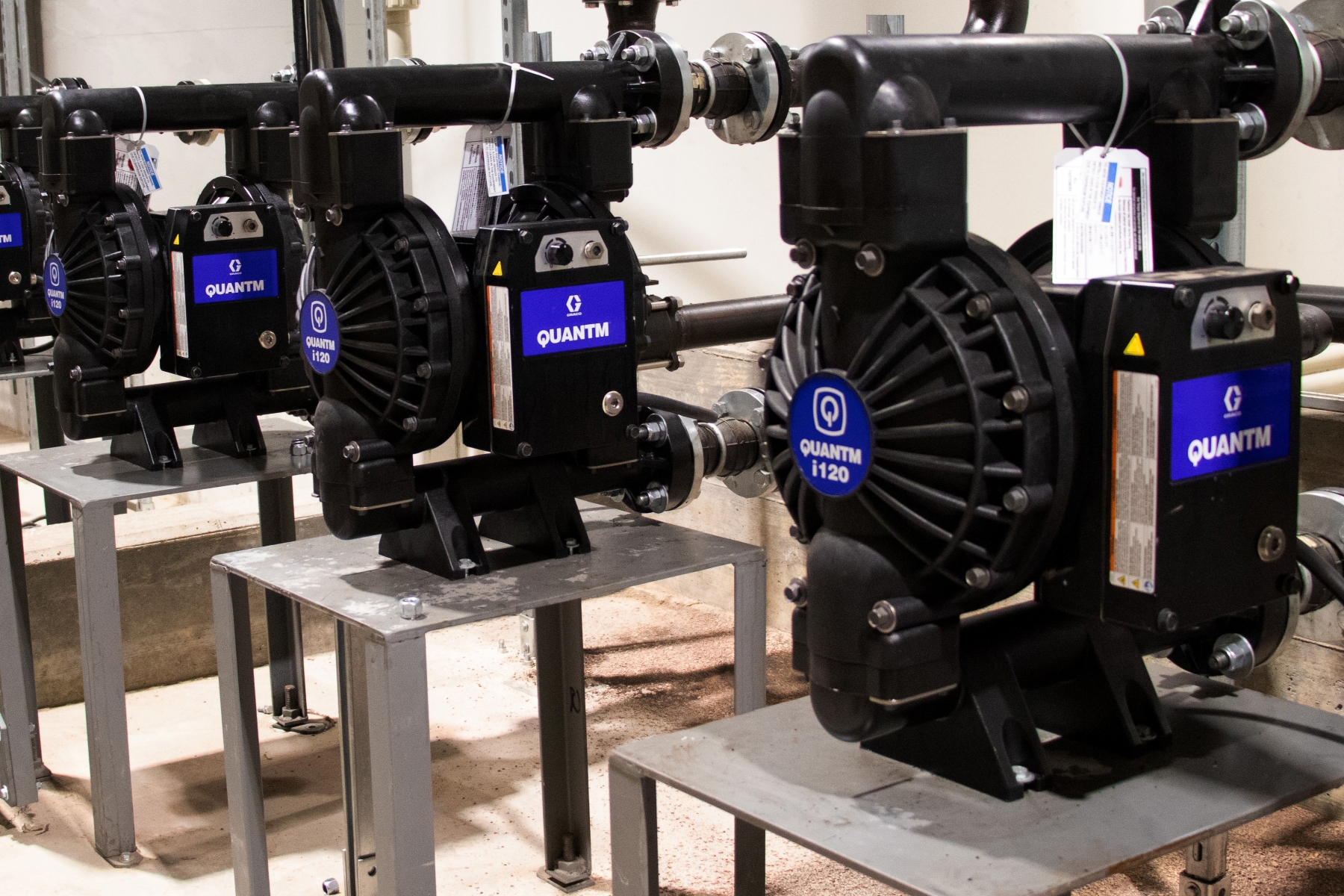
Electric diaphragm technology is an established option in manufacturers' current portfolios. Graco offers QUANTM electric double-diaphragm pumps, while ARO offers the EVO 200 electric double-diaphragm range. Their construction, controls and available configurations are not interchangeable. These product families make an engineering review worthwhile; their existence does not establish that a particular retrofit will pay for itself. [R1, R2]
Energy-efficient diaphragm pump selection starts with the duty
Rank the plant's pump positions by annual operating hours and measured fluid throughput. A fixed pump moving substantial volume every shift presents a different business case from a portable pump used for a short transfer once a week. Record time spent priming, transferring, waiting against a closed line and running after the source vessel empties. A single estimate of “hours available” is not a useful substitute for these operating states.
Graco's published chemical-plant application describes a mixed installation: pneumatic pumps were retained for some intermittent duties, while electric diaphragm pumps were selected for duties with longer running times. That is a useful example of application-led selection, not evidence that the same arrangement or savings will apply at another site. [R3]
Define what the existing pump does successfully
A replacement proposal should preserve the process functions that already work. These may include reliable restart after a shutdown, manageable product shear, compatibility with a cleaning fluid, or the ability to operate through a changing discharge pressure. Write these as requirements with a verification method.
Do not transfer an operating assumption from one diaphragm technology to another. Confirm permissible dry operation, blocked-discharge behavior, starting conditions and control requirements in the exact replacement model's manual. A feature offered by one product family is not a generic property of every electric diaphragm pump.
| Review item | Evidence to collect | Decision it supports |
|---|---|---|
| Operating duty | Actual run hours, batch volume and transfer time | Whether energy savings can be material |
| Fluid and cleaning cycle | Composition, temperature, viscosity range and cleaning sequence | Whether the proposed wet end is suitable |
| Pressure envelope | Minimum and maximum inlet and discharge conditions | Whether the replacement covers the entire duty |
| Site utilities | Electrical supply, cable route, isolation and control interface | Whether the retrofit is practical |
| Installation | Footprint, connection positions, service clearance and pipe support | Whether “replacement” also means pipework modification |
Compare complete systems
For a pneumatic pump, the relevant energy boundary includes the compressed-air system that supplies it. For an electric pump, record electrical energy at the selected boundary, including the drive where applicable. Compare both options at the same delivered volume and pressure duty. A motor nameplate value cannot be compared directly with a compressed-air flow rating to establish operating cost.
Include installation, commissioning, spare-parts strategy and production interruption in the proposal. A promising energy calculation may still produce a poor retrofit if access for servicing is lost or the new control system cannot support the plant's sequence. Conversely, a new installation with no nearby air supply may justify an electric option for reasons that extend beyond annual electricity cost.
Make one controlled pilot the first investment
Select a representative duty, agree acceptance criteria and record a baseline before changing equipment. Evaluate throughput, energy per unit volume, operator observations and maintenance access over a useful operating window. Include the least favorable normal condition, such as a low source-tank level or the coldest expected product, rather than testing only an easy batch.
For a GRACO diaphragm pump or an ARO diaphragm pump enquiry, WILLEE can help organize the existing pump code, fluid information, duty records and installation photographs. The goal is a technically comparable proposal: a pump configuration that fits the process, with savings evaluated from the site's own evidence.
Discuss a retrofit duty with WILLEE
Technical references
[R1] Graco. QUANTM Electric Double Diaphragm Pump.
[R2] ARO. EVO 200 Electric Double Diaphragm Pumps.
[R3] Graco. Case study: Double Diaphragm Pumps in Chemical Application.
Application photographs are manufacturer reference images, not WILLEE customer-project claims. Model-specific instructions take precedence over this general engineering discussion.